Clean and measure
Remove roots and buildup, inspect the full run, and confirm diameter and liner length.
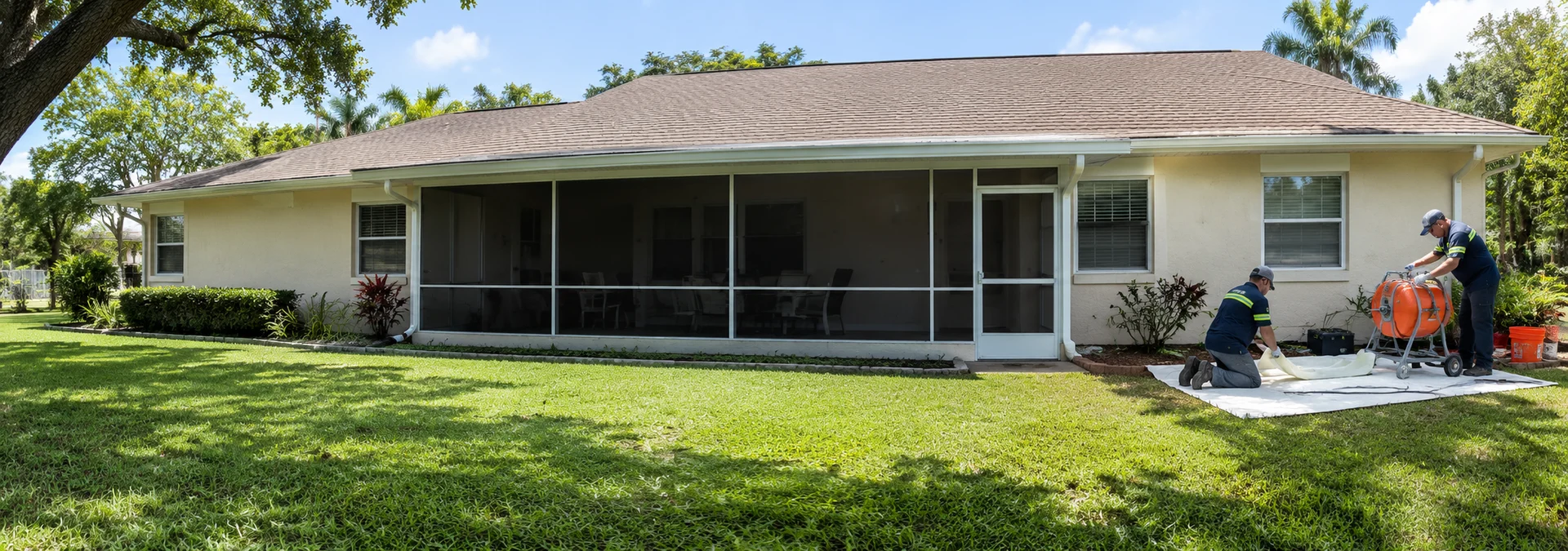
Cured-in-place pipe lining can seal certain cracks, joints, and areas of deterioration without replacing the full line by excavation. The host pipe must still have a usable path and be prepared before installation.
With older cast iron, the inspection should show the remaining pipe after cleaning rather than assume scale is the only issue. Ask how branch openings, changes in diameter and the ends of the liner will be handled.
Keep a copy of the pre-work and final recordings. The proposal should identify the lining length, preparation, connections, access openings and written warranty terms for your particular system.
Cured-in-place pipe lining can renew certain cracked or leaking pipes without excavating the entire route. The host pipe must be cleaned, inspected and suitable for the proposed liner. Lining generally follows the existing route and does not regrade a sagging pipe.
Cured-in-place pipe lining (CIPP), sometimes called sewer pipelining, installs a resin-saturated liner inside a cleaned host pipe and cures it into a continuous interior surface. It can bridge certain cracks and failed joints, reduce root-entry points, and renew deteriorated pipe without opening the full route from above.
The original pipe still matters. It must provide a usable path and enough shape to support the liner. Heavy collapse, major offsets, poor grade, missing sections, and some connection layouts can prevent lining or require excavation first. Preparation and final inspection are central to a successful scope.
Remove roots and buildup, inspect the full run, and confirm diameter and liner length.
Select the liner and resin system and position it for the intended host pipe. Choose a liner and resin system for the host pipe’s diameter, route, and the specified installation and curing method.
Invert or pull the liner into place, then cure it using the specified process. For CIPP, confirm liner length and diameter, branch reconnections, cure method, final inspection, and any restoration excluded from the estimate.
Restore required branch connections and record the finished interior condition. The review should connect the symptom to a location and the visible pipe condition, including what remains sound beyond the trouble spot. Keep the footage or findings with the estimate so the recommended work can be compared with what was actually observed.
A continuous run with defects but enough remaining structure and alignment for lining.
Multiple root-entry joints that can be covered by a continuous liner. Clearing can restore flow, but it does not close the point where roots entered. A camera review after cleaning can show whether a spot repair or a broader pipe solution fits.
Routes where avoiding a long open trench may reduce property disruption. This method depends on the pipe, route, connections, and access meeting its requirements. A site evaluation should explain any access pits, preparation, or restoration that may still be needed.
A liner reduces the inside diameter somewhat, but its smooth surface can still provide suitable flow when the line is properly designed and installed. The provider should explain the finished diameter.
Not through a fully collapsed section without restoring an open path. Local excavation may be needed, or a different replacement method may be more appropriate.
Branch connections may need to be reopened with specialized equipment. The scope should identify known connections and how they will be verified.
A continuous liner can cover many root-entry cracks and joints within the lined section. Roots can still exploit unlined defects or connection points, so the full route matters.
No-dig sewer repair and replacement options for suitable underground lines.
Explore →SERVICEClear intrusive roots and address the opening that allowed them into the line.
Explore →SERVICETargeted repair options for cracked, separated, leaking, or damaged sewer lines.
Explore →Lining starts with a camera review and a check of whether the existing pipe can support the proposed system. Cleaning requirements, connections, pipe shape, and standing water need to be understood first.
Preparation, liner length and diameter, reinstating connections, and post-installation inspection affect the price. Ask how the proposal handles an unsuitable section discovered during preparation.
Sewer repair cost factors · Find your Fort Myers wastewater utility
Estimate requests are disabled in this private preview. See the estimate form.