Plan the pull
Confirm route, length, depth, utilities, pipe material, connections, and equipment access.
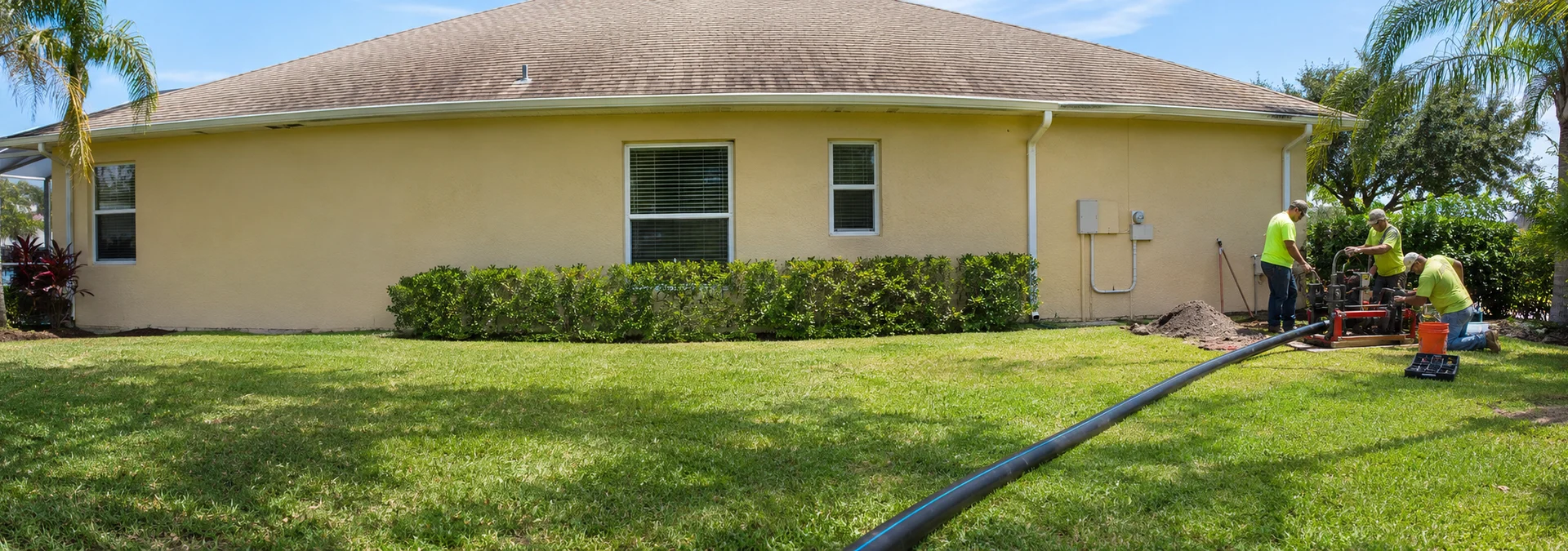
Pipe bursting fractures the existing line while a new pipe is pulled into place. It can reduce continuous trenching but still requires access pits and enough room to complete the pull.
Have the contractor locate the route and review nearby services before proposing a pull. The method still needs working room at each end and a plan for connections along the route.
Ask what material and diameter will be installed and how the finished line will be tested. A price should also identify the access pits, any concrete cuts and who restores the surface.
Pipe bursting pulls new pipe through the route of the existing line while a bursting head breaks the old pipe outward. Entry and exit access, nearby utilities and the pipe layout determine whether it is suitable.
Pipe bursting replaces an existing line by pulling a bursting head and new pipe through the old route. The head fractures or displaces the old pipe while the replacement follows behind it. This can avoid a continuous open trench and may allow a similar or larger new pipe on suitable projects.
The method still requires careful planning. Entry and receiving pits, existing pipe material, soil, nearby utilities, bends, transitions, connections, and room for the pipe pull all affect feasibility. A camera inspection and accurate route locating help determine whether bursting is a better fit than lining or traditional excavation.
Confirm route, length, depth, utilities, pipe material, connections, and equipment access.
Excavate entry and receiving areas sized for the bursting head and new pipe. Before pipe bursting, verify that the entry and receiving pits fit the route, utilities are marked, and there is room for the pull.
Pull the head through the old line while the new pipe follows the same general path.
Make building and downstream connections, test the line, backfill pits, and restore surfaces.
Long runs where avoiding an open trench may protect more of the surface. These conditions can extend beyond a single repair point, so the full accessible route should be reviewed. Compare replacement methods against pipe condition, connections, access, and restoration.
A host line that should be replaced rather than used to support a liner. These conditions can extend beyond a single repair point, so the full accessible route should be reviewed. Compare replacement methods against pipe condition, connections, access, and restoration.
Projects with workable pull length, access pits, and manageable connections. This method depends on the pipe, route, connections, and access meeting its requirements. A site evaluation should explain any access pits, preparation, or restoration that may still be needed.
No. It reduces continuous trenching but normally requires entry and receiving pits plus excavation at connections.
Some projects can install a larger line, but soil, utilities, route, connections, local requirements, and equipment determine what is practical.
The bursting head fractures or displaces it into the surrounding soil while the new pipe occupies the route.
No. Material, reinforcement, repairs, encasement, bends, and nearby utilities can limit or prevent the method.
No-dig sewer repair and replacement options for suitable underground lines.
Explore →SERVICEFull or partial replacement for collapsed, severely deteriorated, or repeatedly failing pipe.
Explore →SERVICECreate a new cured-in-place interior surface within a suitable existing pipe.
Explore →A bursting proposal needs more than a damaged-pipe diagnosis. The existing route, nearby utilities, connections, soil conditions, and room for entry and receiving pits all need review.
Pit locations, lateral connections, pipe length, utility conflicts, and restoration drive the scope. Ask what conditions could require open excavation even when most of the replacement uses bursting.
Sewer repair cost factors · Find your Fort Myers wastewater utility
Estimate requests are disabled in this private preview. See the estimate form.